Residential rodent exclusion stops seasonal house mouse (Mus musculus) and deer mouse (Peromyscus maniculatus) infestations by addressing structural building envelope failures rather than relying solely on interior…
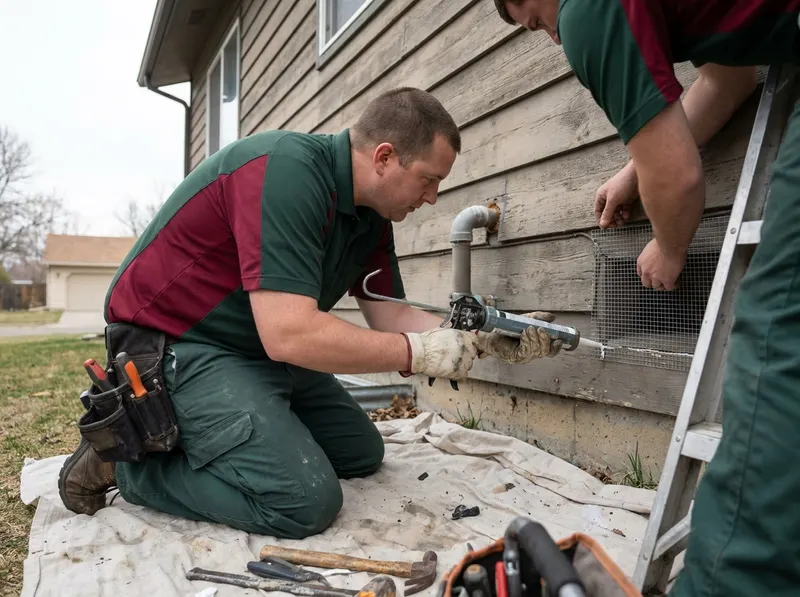
Residential rodent exclusion stops seasonal house mouse (Mus musculus) and deer mouse (Peromyscus maniculatus) infestations by addressing structural building envelope failures rather than relying solely on interior poison bait blocks. In Yellowstone County, regional winter freeze transitions beginning every October drive rodents off agricultural rim lands and riparian corridors into residential basements and heated attics. While repetitive chemical baiting kills individual animals, it leaves the original gaps open, which creates odor issues from decomposing rodents inside wall cavities and allows subsequent litters to repopulate the structure within 30 to 60 days. Physical exclusion trades the ongoing expense of continuous quarterly pesticide contracts for a durable physical shield, using 19-gauge galvanized wire cloth, chimney-cap spark arrestors, and rigid aluminum kickplates that gnawing incisors cannot penetrate.
Structural rodent vulnerabilities vary sharply across Billings topography. Properties in Billings Heights, Lake Hills, and Fox Run often border open sagebrush benches where deer mice migrate down from The Rimrocks and Swords Rimrock Park as soil temperatures freeze. These construction types frequently feature vented crawlspaces where settling ground unseats galvanized screen frames. Older brick foundations and stone-sill homes throughout Central - Terry, North Elevation, and the South Side present settlement fractures along stone facades and open utility line entrances for vintage plumbing. In the West End and Ironwood developments, vinyl siding corner posts and overhead garage door rubber bottom seals present the primary access points, where a quarter-inch opening beneath an unlevel concrete apron allows access directly into heated utility rooms. Properties along the Yellowstone River and through Lockwood face elevated Norway rat (Rattus norvegicus) pressure along wet foundation borders, requiring concrete backfilling alongside buried wire aprons to stop subterranean burrowing beneath slab foundations.
Exclusion protocols operate in sequential stages to ensure no rodents are permanently trapped inside living quarters. Technicians first map all thermal runways and rub marks along foundation sill plates, air conditioning line sets, gas pipe entries, and roof junctions. Mechanical snap trapping runs concurrently inside attics and basements for 7 to 14 days to eliminate interior populations before completing the final seal. Exterior utility penetrations receive Escutcheon plates and copper mesh reinforced with silicone-based sealants. Crawlspace foundation vents receive welded steel wire screens bolted into concrete footings rather than glued. Where concrete slabs meet rough framing along garage walls, brush-style weather stripping and heavy-duty astragal door bottoms block ground-level crawling paths. This systematic process establishes a mechanical barrier that protects family food storage areas and electrical wiring without disbursing tracking powders or rodenticide pellets across living rooms.
Every job gets a firm, written price after a free on-site visit.
Tell us about your residential rodent exclusion job in Billings and we'll send a clear, written quote, usually the same day.
 Marvexo Pest Solutions