Subterranean termites require continuous contact with soil moisture to survive, building sheltered mud tubes across foundation stems to reach framing timbers. In Billings, structural infestations concentrate heavily…
Subterranean termites require continuous contact with soil moisture to survive, building sheltered mud tubes across foundation stems to reach framing timbers. In Billings, structural infestations concentrate heavily along the Yellowstone River corridor, South Side, and Central - Terry, where older sandstone foundations, timber-to-soil contacts, and aging subterranean irrigation pipes supply artificial moisture through prolonged cold snaps. Conversely, modern slab-on-grade developments in the West End, Fox Run, and Ironwood experience termite pressure primarily along foundation expansion joints and bath traps beneath hydronic radiant tubing, where winter heating prevents ground freezing and sustains colony activity year-round.
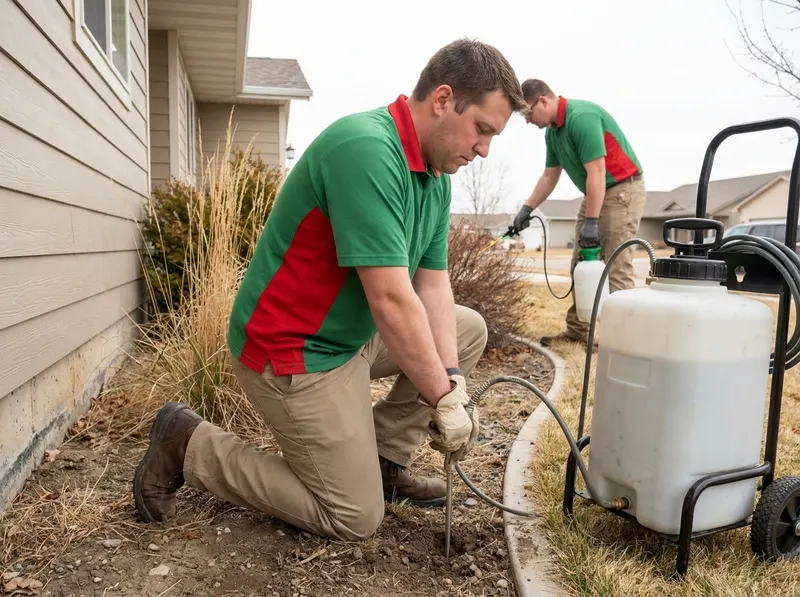
Eradicating these colonies relies on continuous non-repellent liquid barriers, such as fipronil formulations applied at 4 gallons per 10 linear feet, rather than temporary surface wood sprays. For homes situated near sandstone formations in Billings Heights, Lake Hills, or below The Rimrocks, heavy clay-shale soils slow termiticide migration, requiring high-pressure rod injection 12 inches down to the footing. Properties in Lockwood with shallow water tables near river bottoms utilize low-toxicity hexflumuron or noviflumuron baiting stations placed at 10-foot intervals instead of continuous liquid saturation to safeguard surrounding soil ecosystems.
1. Technicians conduct an acoustic and visual inspection of crawlspaces, rim joists, and foundation perimeter walls to map active galleries.
2. Soil trenches measuring 6 inches wide by 6 inches deep are excavated along foundation footings for chemical immersion.
3. Technicians drill half-inch access holes spaced 12 inches apart through attached porches, garage slabs, and driveways, followed by interior void treatments.
4. Expansion holes are plugged with non-shrinking hydraulic cement, and ongoing perimeter bait arrays are anchored to track subterranean pressure changes.
Every job gets a firm, written price after a free on-site visit.
Tell us about your subterranean termite treatment job in Billings and we'll send a clear, written quote, usually the same day.
 Marvexo Pest Solutions